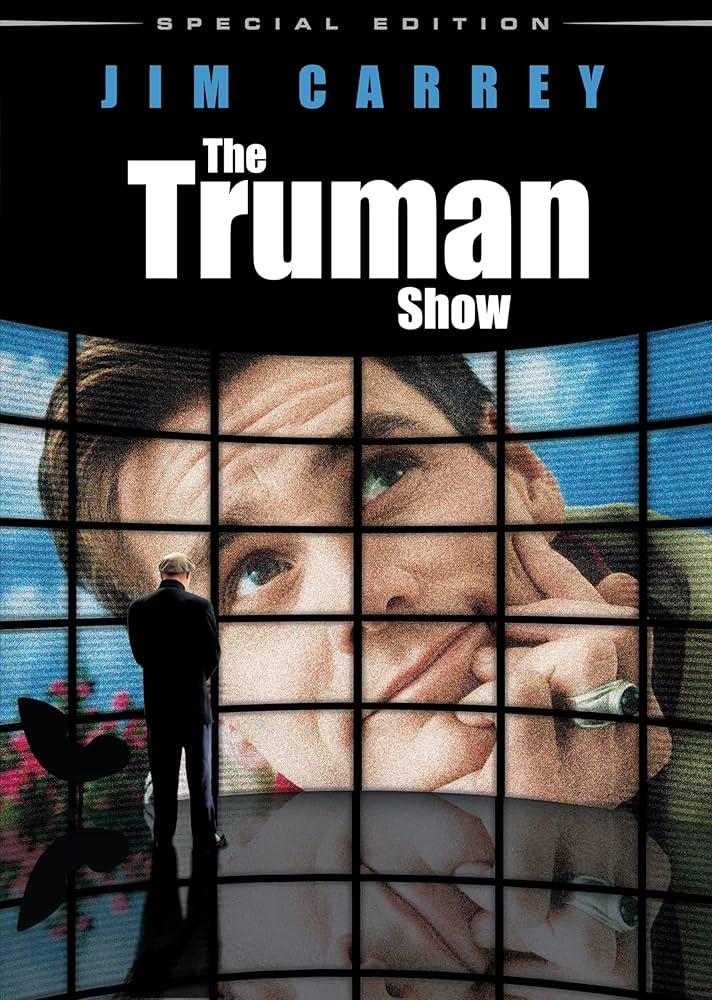
In the realm of cinematic storytelling, few films have managed to straddle the line between satire and philosophical inquiry as deftly as Peter Weir’s “The Truman Show.” Released in 1998, this film has continued to provoke discussion and debate, challenging viewers to question the very nature of reality and the societal constructs that define it. At its core, ”The Truman Show” presents a dual narrative: it is both a critique of the insatiable hunger for fame that permeates modern culture and an exploration of the pervasive surveillance that has become an inescapable aspect of contemporary life. Through the life of Truman Burbank, an unwitting star of a meticulously orchestrated reality television show, the film examines the ethical implications of entertainment at the expense of privacy and autonomy. As we delve into this cinematic masterpiece, we are compelled to ask: is “The Truman Show” a cautionary tale about the perils of celebrity, or does it serve as a prescient exploration of the surveillance state that shadows our every move? This article seeks to unravel these complex themes, offering a comprehensive analysis of how the film continues to resonate in an era where the boundaries between public spectacle and private existence are increasingly blurred.
The Dual Lens of Critique and Exploration in The Truman Show
Through the dual lens of critique and exploration, The Truman Show deftly navigates the blurred lines between reality and artifice, offering a potent commentary on the nature of fame and the pervasive reach of surveillance. On one hand, it serves as a critique of fame, highlighting how Truman’s life, manipulated and broadcasted without his consent, mirrors the invasive nature of celebrity culture. The film underscores the moral quandaries of turning a person’s life into a commodity, questioning the ethical implications of consuming another’s reality for entertainment.
Conversely, the film is also an exploration of surveillance, reflecting societal anxieties about privacy in an increasingly monitored world. As Truman navigates his meticulously constructed reality, the omnipresent gaze of the cameras symbolizes the loss of personal space and autonomy. This aspect of the narrative invites viewers to consider:
- The psychological impact of living under constant observation.
- The balance between public interest and individual rights.
- The power dynamics inherent in who controls the narrative.
In blending these themes, The Truman Show challenges audiences to reflect on their own roles as both spectators and participants in a world where the lines between genuine and fabricated experiences continue to blur.

Deconstructing Fame: A Psychological Insight into Trumans World
In a world where the boundary between public and private life has become increasingly blurred, The Truman Show stands as a poignant narrative that explores the complexities of modern fame and surveillance. The film cleverly navigates the psychological impact of living under constant observation, questioning the ethical implications of reality television and media manipulation. Truman Burbank’s life, meticulously curated for entertainment, mirrors the voyeuristic tendencies of contemporary society. Is he a victim of fame, or is he a symbol of our collective surrender to surveillance culture? This duality invites us to question whether the allure of fame is worth the psychological toll it imposes.
- Fame as a Construct: Truman’s existence is manufactured, yet it reveals the raw, unfiltered essence of human vulnerability.
- Surveillance and Control: The omnipresent cameras serve as a metaphor for societal control, highlighting the erosion of personal autonomy.
The film’s narrative challenges viewers to reflect on their own participation in this dynamic. Are we complicit in creating the demand for such spectacles? The psychological unraveling of Truman illustrates the inherent conflict between the desire for authenticity and the seductive power of visibility. By blurring the lines between entertainment and exploitation, The Truman Show not only critiques the pursuit of fame but also serves as a cautionary tale about the pervasive reach of surveillance in our lives.

Surveillance Unveiled: The Omnipresence of the Camera Eye
In the film, the omnipresence of surveillance is embodied by the ceaseless gaze of the camera eye, turning Truman’s world into a spectacle for an unseen audience. This omnipresence is not merely a backdrop but a critical player, echoing the modern-day reality where surveillance has become an inescapable part of daily life. Through an analytical lens, we can discern how The Truman Show delves into the consequences of a life lived under constant observation. The film explores the erosion of privacy, the manipulation of reality, and the ethical implications of such pervasive scrutiny.
- Privacy Erosion: Truman’s lack of awareness about his monitored existence parallels our own desensitization to surveillance in public and private spheres.
- Reality Manipulation: The control exerted over Truman’s environment raises questions about the authenticity of experiences in a surveilled world.
- Ethical Dilemmas: The moral considerations of using surveillance for entertainment challenge the boundaries between public interest and personal rights.
By dissecting these elements, The Truman Show transcends a mere critique of fame, positioning itself as a prescient commentary on the societal implications of an ever-watchful gaze.

Balancing Fame and Privacy: Lessons from Trumans Journey
The journey of Truman Burbank, the unsuspecting protagonist of The Truman Show, serves as a profound commentary on the intricate dance between the allure of fame and the sanctity of privacy. Truman’s life, broadcasted to millions without his consent, starkly highlights the invasive nature of fame that today’s celebrities grapple with. In a world where every action is scrutinized and commodified, Truman’s experience raises critical questions about the moral implications of exploiting one’s life for entertainment. It reflects the real-world struggles faced by public figures who must navigate the fine line between maintaining personal boundaries and satisfying public curiosity.
- Loss of Autonomy: Truman’s lack of awareness about his situation parallels the often uncontrollable nature of fame, where one’s life becomes a spectacle.
- Public Ownership: The show’s audience believes they have a stake in Truman’s life, mirroring how fans and media claim ownership over celebrities’ personal moments.
- Surveillance Society: Truman’s constant observation foreshadows modern concerns about privacy in an era dominated by surveillance technology.
Through Truman’s journey, the film invites viewers to reflect on the price of fame and the societal obsession with voyeurism. It challenges us to consider the ethical boundaries of entertainment and the right to privacy, urging a reevaluation of our consumption habits in a surveillance-driven culture.